
Dental Bridges – Athens, GA
Replace One or Several Missing Teeth in a Row
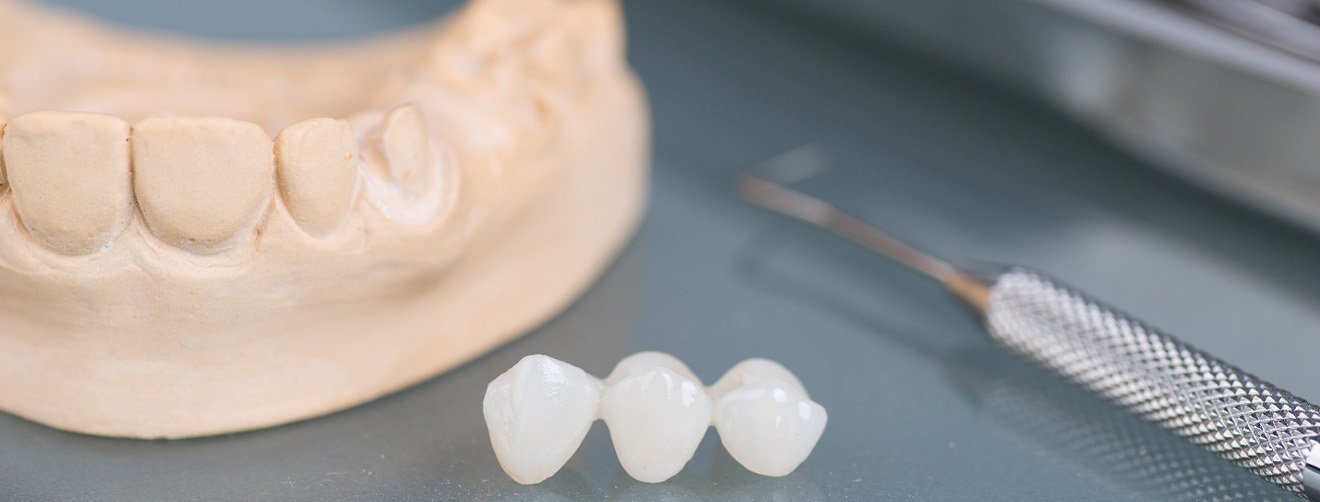
Tooth loss can affect your daily quality of life in a few different ways. For example, you might struggle to bite and chew healthy foods, have a harder time pronouncing specific words, or feel too self-conscious to smile confidently.
Our compassionate Athens providers understand how challenging these changes can be, and we are happy to help replace one or several missing teeth in a row with a customized dental bridge. Continue reading to learn more about these restorations and how they work to help determine if this treatment is right for you!
Why Choose Athens Dental Associates for Dental Bridges?
- Restore Your Smile’s Function and Appearance
- Advanced Digital Impressions for Improved Accuracy
- Durable, Customizable Materials
What Is a Dental Bridge?
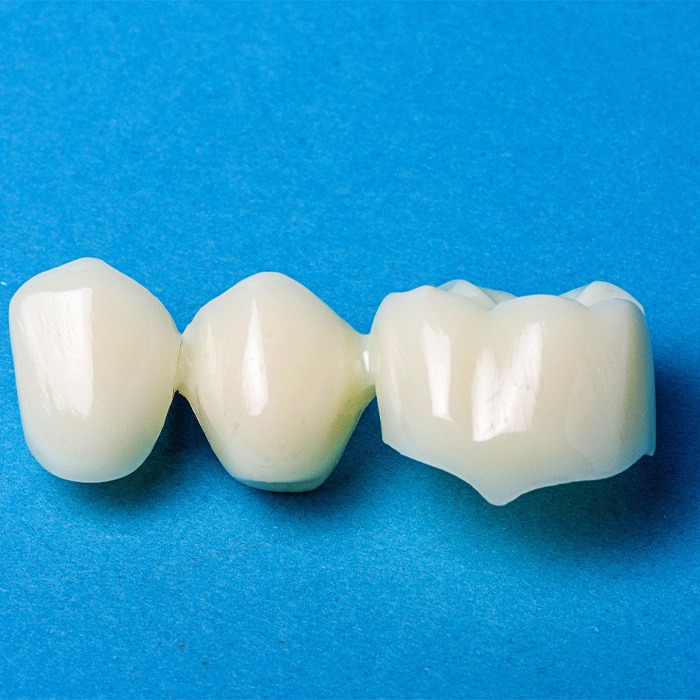
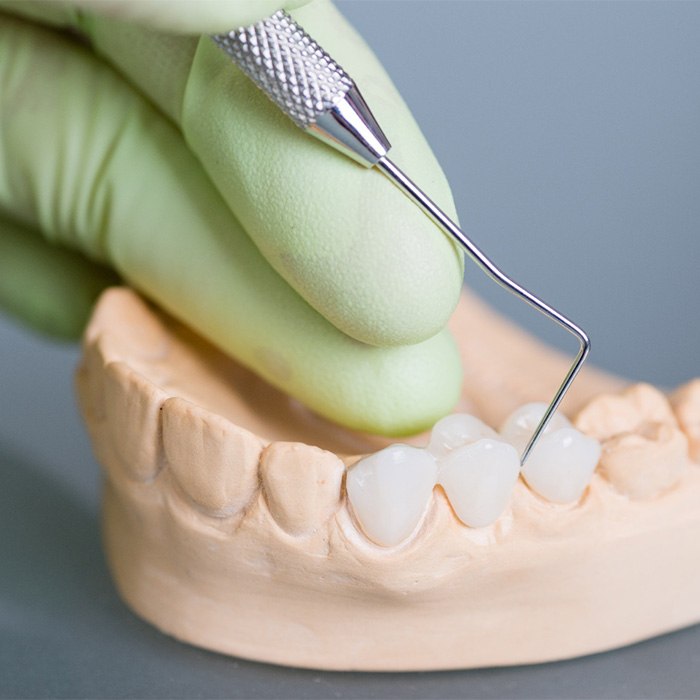
A dental bridge is an oral prosthetic that contains the required number of replacement teeth positioned between two dental crowns. It’s usually made from resilient ceramic, such as porcelain, that reflects light like enamel and can be crafted to match the size, color, and shape of your natural teeth for beautiful, seamless results.
This restoration can rebuild 1 to 4 lost teeth in a row, and isn’t usually intended to be removed once it’s cemented in place, except by a professional for repairs or replacement, if needed. With proper care, it can last 5 to 15 years, making it a lifelike, resilient solution for tooth loss.
Types of Dental Bridges
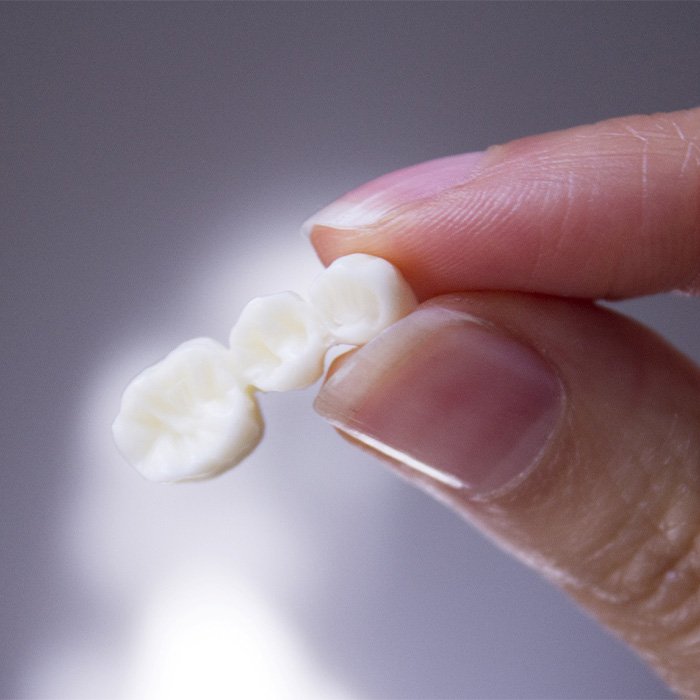
There is more than one kind of dental bridge, and our Athens team can make a professional recommendation based on our findings once we’ve had the opportunity to examine your current dental condition. Each type is outlined below in more detail for your convenience:
Traditional Dental Bridge
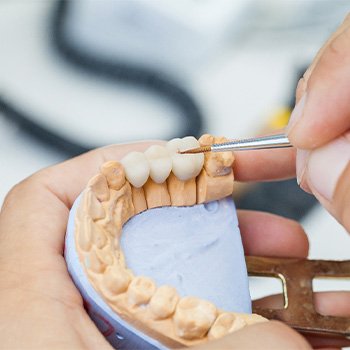
This is the standard choice and is the more common of the two options. However, it requires that you have sufficiently strong teeth on each side of the gap in your grin to provide a firm foundation to hold your prosthetic in place. Patients who have developed more severe damage or decay might therefore be better candidates for an implant bridge.
Implant Bridge
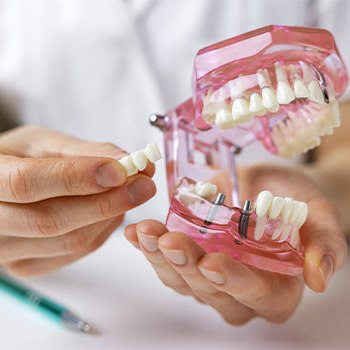
This functions similarly to the traditional dental bridge, except it involves surgically placing two biocompatible implant posts directly into your jaw. Then, once you’ve recovered, our team can provide a specially designed restoration to attach to them rather than relying on healthy teeth in your mouth.
The Benefits of Getting a Dental Bridge
There are several excellent reasons to restore your smile with a one-of-a-kind dental bridge, including:
- Versatility. This can be an effective way to rebuild one or a few consecutively missing teeth, based on how many were lost.
- Customizable materials. We utilize tooth-colored materials that reflect light more like enamel and can be made to match your teeth for realistic results.
- Improved bite force. Replacing lost teeth returns a portion of your original chewing power so that you can enjoy a wider variety of wholesome foods.
- Enhanced enunciation. Closing spaces in your smile can help you overcome associated changes to your speech patterns, such as a lisp or slur.
- Long-term results. These resilient restorations can last a decade or longer with proper care.
Dental Bridges FAQs
Can you take a dental bridge out?
While you may have heard of a “removable bridge,” this is actually a misnomer that refers to a partial denture that is designed to be taken out for hygiene purposes. A true dental bridge is designed to remain fixed in position within the mouth at all times and should be impossible to remove without the help of a qualified oral health professional such as one of the team members at Athens Dental Associates. Never attempt to remove your dental bridge on your own and immediately contact our office if you find you are able to do so. Our staff will be able to repair or replace your appliance as necessary.
How many teeth can a dental bridge replace?
A dental bridge can replace one to four sequential missing teeth depending on how it is supported. A traditional dental bridge fixed to the healthy teeth on either side of the gap is usually used to replace one or two teeth since more than that can compromise the stability of the device. Since implant bridges are securely anchored to the jawbone, they can be used to replace three or four missing teeth. The team at Athens Dental Associates will be happy to help you understand the best way to restore your smile when we see you at our office.
Can dental bridges be whitened?
Since dental bridges are not made from porous natural enamel, they cannot be affected by the bleaching agents used in teeth whitening treatments. If you wish to receive teeth whitening as well as a dental bridge, it’s probably best to whiten your grin before having the device placed so your artificial teeth can be shaded to match your smile’s beautiful new hue. The dentists at Athens Dental Associates will be happy to help you understand the best way to achieve a complete and beautiful smile when they see you during your consultation at our office.
Can dental bridges get cavities?
Since dental bridges are not made from living oral tissues, they cannot be affected by the bacteria that cause cavities and other oral infections. However, the teeth, gums, or jawbone structure supporting a bridge can still become compromised by infections, and this can lead to appliance failure. To prevent this, be sure to practice excellent oral hygiene by brushing and flossing every day, visit our office in Athens every six months for routine exams and cleanings, and make smart eating decisions that reduce your intake of acids and sugars.